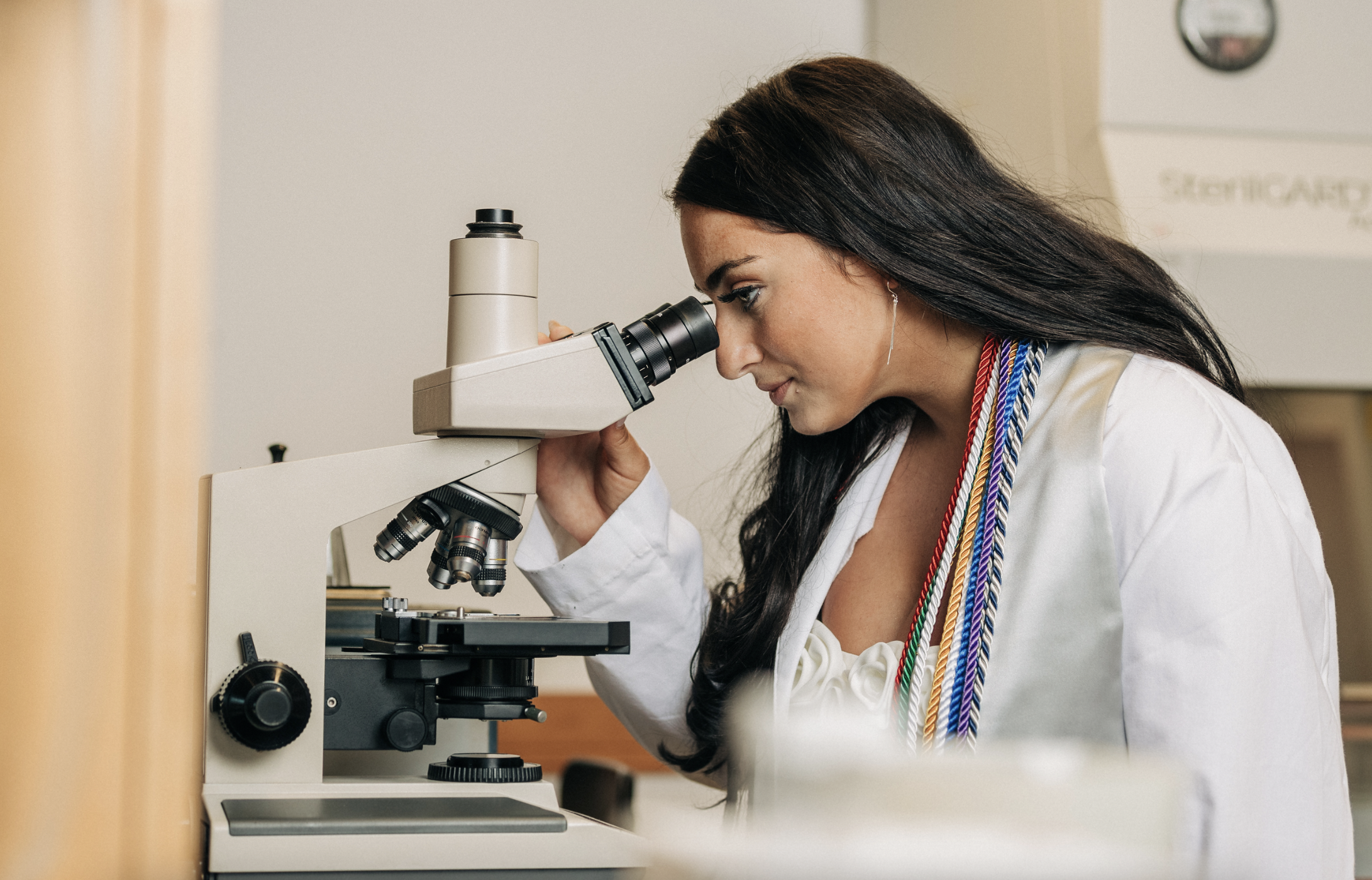
Elizabeth Ricci
About Me
Hello! My name is Elizabeth Ricci, but I go by Ellie. I am a fun, hardworking, and driven individual who is passionate about research. I graduated from Fairfield University in May 2023, where I studied Behavioral Neuroscience and minored in Italian language. I am now completing a two year post-baccalaureate program at Yale School of Medicine. I am a member of the Deniz lab, which focuses on Pediatric Neurology. I created this portfolio to provide others with a deeper dive into my various research projects. As an avid learner, I have pursued research in a variety of fields, including biology, neuroscience, and engineering. Through my research, I have developed strong analytical skills and a keen attention to detail. I believe that my dedication and enthusiasm for research have allowed me to achieve meaningful results, and I am excited to share my work with you through this portfolio.

Lab Affiliations
-
Yale University School of Medicine
Hydrocephalus, characterized by excessive brain fluid, affects 1 in 1000 live births, yet our understanding remains incomplete. This hinders effective treatment development. Human genomic studies have identified mutated genes linked to congenital hydrocephalus, but their specific roles in disease pathogenesis are unclear.
At Deniz Lab, we have established frogs as a rapid and efficient model for studying these human congenital hydrocephalus genes. Using optical coherence tomography imaging, we investigate CNS development, ciliary function, and cerebrospinal fluid dynamics in real-time. This approach allows us to directly visualize CSF flow, enhancing our analysis of candidate genes identified in patients. Our model promises new insights into the mechanisms underlying hydrocephalus formation, offering a promising pathway for advancing disease understanding and developing innovative treatment strategies.
My research focuses on the role of three cilia gene mutations identified in patients with congenital hydrocephalus, specifically foxj1, c21orf59, and ptch1. We use CRISPR-mediated genetic manipulation and morpholino-based knockdown techniques to induce targeted mutations via one and two cell injections and suppress gene expression, respectively and use OCT imaging to delineate the two hallmarks of the hydrocephalus presentation; aqueductal stenosis and/or ventriculomegaly. Furthermore, we perform in situ hybridization to visualize RNA expresion patterns using the brain markers emx1, eomes, foxjg1, neurod2. Our preliminary results demonstrate significant changes in brain patterning when cilia are lost, suggesting a link between hydrocephalus development and cilia gene mutations. Interestingly, knocking down ptch1 also results in craniofacial abnormalities. My future work will incorporate two other genes, fat4 and pax9, which excite me for their potential role in the devleopment of the branchial arches. I plan to perform in situ hybridization on these three genes to examine markers for gill formation.
-
Fairfield University
With the COVID-19 pandemic, more individuals including adolescents have been experiencing symptoms of depression and anxiety. Previous research in rodents suggests that social isolation can enhance anxiety- and depressive-like symptoms, making rats a good model to examine brain areas involved in the onset of these symptoms, and to identify potential treatments.
Our study investigated how prolonged social isolation beginning in adolescence impacts anxiety-like behaviors and spatial memory in rats, and how these measures may differ by sex. In our study, 16 male and 16 female Long Evans rats arrived after weaning on post-natal day (P)22 and were assigned housing conditions at the start of adolescence (P28). Four groups were used: socially isolated (SI) males, group-housed males, SI females, and group-housed females. Weekly behavioral tests began 5 weeks later, and housing conditions remained the same throughout the study. Anxiety-like behaviors were assessed using the elevated plus maze (EPM), social interaction (sociability) tests, and the open field test (OFT). Spatial memory was tested using novel object location (NOL) and Morris water maze (MWM). Data collection was done sing video-tracking software (ANY-Maze), and analyzed data using Graph Pad Prism.
Our results indicated significant effects of housing on both anxiety-like behaviors and spatial memory. Our findings suggested female Long Evans rats are more exploratory than males and that social isolation enhances anxiety-like behaviors and impairs spatial memory in rats, regardless of sex. These findings have important implications, given the prolonged social isolation experienced by teens during the COVID-19 pandemic.
-
Fairfield University
People who require a heart transplant must wait six months or more to receive a donor heart. Up to 50,000 patients are heart-transplant candidates and because of the severe organ scarcity, healthcare practitioners must carefully consider who should receive a heart transplant.
The objective of this project was to simulate and manufacture a muscular and vascular system, composed out of living cellular tissues and other bioengineered materials, that will be then actuated to produce a volumetric flow rate by means of peristalsis via electromechanical stimulus.
I worked on the preliminary data for this multi-step project on a biology side, but collaborated work with the school of engineering and worked with a team of people with varying expertise. At the start of our project, we aimed to grow cardiomyocytes via cell culture techniques, which are vital for the study of cell properties in vitro. However, the introduction of mammalian cells to engineering processes, such as 3D bioprinting and electrospinning, are relatively new advancements. Since the physiological understanding of cellular tissue function is limited, the use of 3D printing can eventually help to achieve more complex tissue-like structures with more physiological relevance.
The first approach was to use these cells for 3D bioprinting in a collagen gel matrix, for the eventual modeling for 3D bioprinting of a simulated blood vessel wall. Our preliminary studies suggested that cells can successfully be bioprinted in this material, and can remain viable.
The second approach was to grow cells onto material products of electrospinning, which is a fiber production method that involves an electrified liquid droplet which is then stretched to create a fiber. H9c2 cells were applied to an electrospun ladder structure with the goal of cell elongation on scaffolded material.
Our results have demonstrated that H9c2 cells can attach to the electrospun material and remain viable. In conclusion, we believe each method may provide a useful tool for examining cellular function in 3D tissue.
Current Work:
My research on congenital hydrocephalus in the Deniz Lab has allowed me to explore a newfound interest in neurodevelopment. In my work, I have focused on three major genes: c21orf59, foxj1, and ptch1. Notably, mutations to ptch1 lead to craniofacial abnormalities, which has prompted me to investigate the intersection between craniofacial issues and hydrocephalus through genes such as fat4 and pax9. This new direction excites me not simply as a researcher but also as a prospective dentist.

Past Poster Presentations

Presented at The Pediatric Research Forum at Yale University School of Medicine in New Haven, CT and the National Conference on Hydrocephalus, HA CONNECT in Tampa, Florida, where I won the HA Next Generation Travel Award
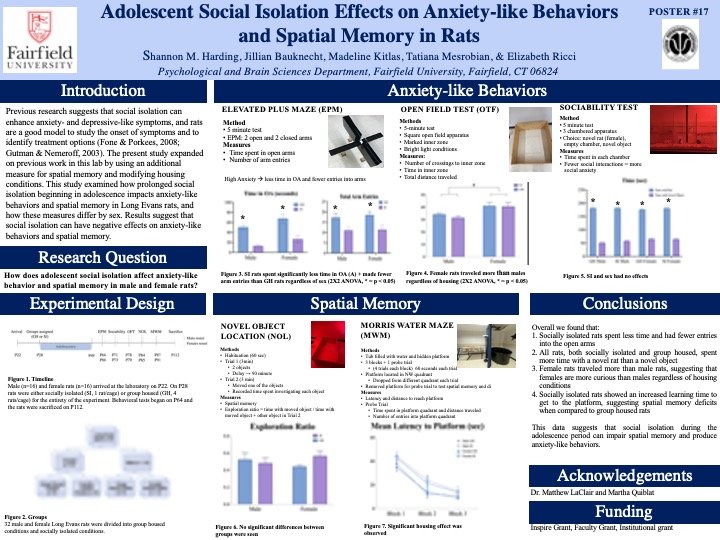
Presented at The Eastern Psychological Association Conference in Boston, MA, The NEURON Conference at Quinnipiac University in Hamden, CT, The Psychology Research Symposium at Fairfield University in Fairfield, CT, and The Sigma Xi Research Symposium at Fairfield University in Fairfield, CT
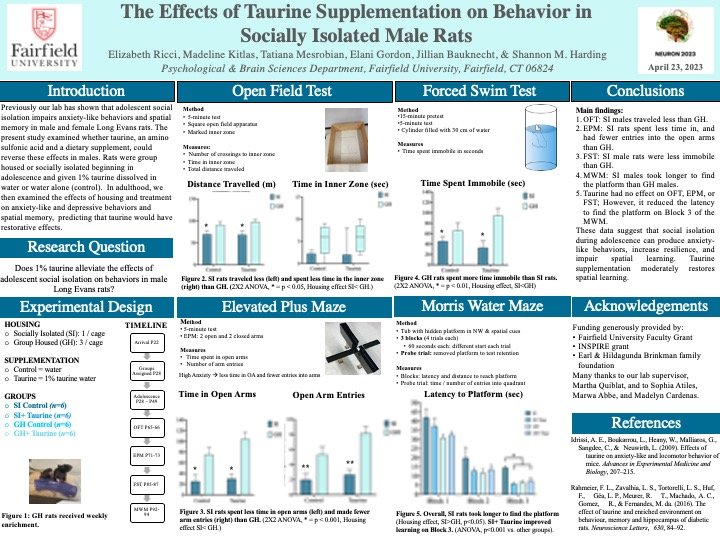
Presented at The NEURON Conference at Quinnipiac University in Hamden, CT, The Psychology Research Symposium at Fairfield University in Fairfield, CT, and The Sigma Xi Research Symposium at Fairfield University in Fairfield, CT

Presented at The Materials Research Society Conference in San Francisco, CA and The Sigma Xi Research Symposium at Fairfield University in Fairfield, CT
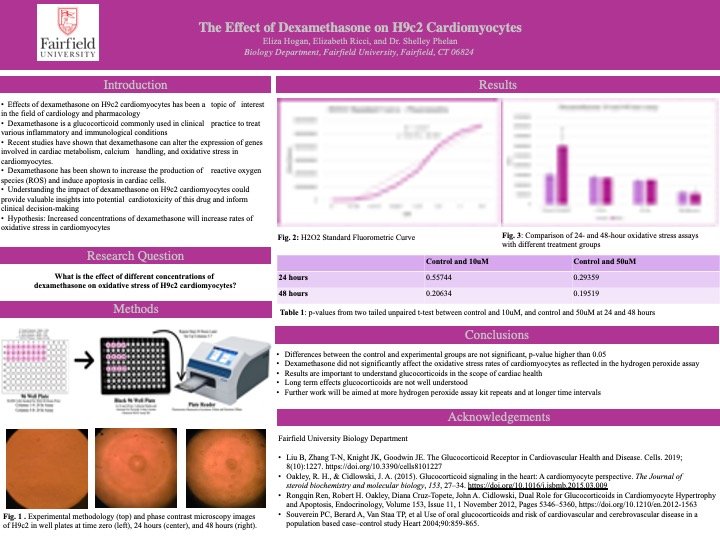
Presented at The Sigma Xi Research Symposium at Fairfield University in Fairfield, CT

Presented to The Neuroscience Department at The National University of Ireland, Galway

Presented at the Sigma Xi Research Symposium at Fairfield University in Fairfield, CT

Presented at The Materials Research Society Conference in San Francisco, CA and The Sigma Xi Research Symposium at Fairfield University in Fairfield, CT


Applying Research to Dentistry
As a dental professional, understanding the effects of drugs and medications on the body is crucial:
Research into cilia gene mutations like FOXJ1, C21ORF59, and PATCH1 in hydrocephalus sheds light on their role in brain development and potential implications for craniofacial anomalies. This understanding could inform dental care strategies, particularly in managing patients with hydrocephalus-related craniofacial abnormalities, emphasizing interdisciplinary approaches to comprehensive patient management and potential therapeutic advancements.
Observing the effects of dexamethasone on oxidative stress of H9c2 cardiomyocytes can provide insight into how this medication, commonly prescribed for inflammation and pain, may impact oral health.
Optimizing cell growth conditions for 3-D organ printing models may have potential applications for dental implants or tissue engineering in dentistry.
Analyzing whether social isolation during adolescence in rats inhibits spatial memory and anxiety-like behaviors can provide insight into how social experiences can impact mental health. This understanding can be applied to patient care, as anxiety is a common issue among dental patients.
Overall, these research projects have helped broaden my knowledge and provide a greater understanding of how various factors can impact oral health and patient wellbeing.